GuidesTanzania
Your first safari in Africa: how to prepare
When to go, how a day unfolds, what to pack and how to behave: everything you need to know for your first safari in Africa, with realistic expectations.
In this article
A safari is not a visit to the zoo. The animals are wild, sightings cannot be guaranteed, and a lot depends on patience, dawn alarm calls and the eye of a good guide. Start with the right expectations and your first safari will be one of the trips you remember longest.
When to go
In East Africa the most popular periods are the driest ones: in northern Tanzania, generally from June to October and in the weeks of January and February. The vegetation is lower and the animals gather around water points, so they are easier to spot. In the rainy months the landscapes are lush green and there are fewer people, but some roads are harder going. The movements of the great herds change every year: nobody can say exactly where they will be on a given date.
How a day unfolds
- An early start: the first hours of the morning and the late afternoon are when animals are most active and the light is at its best.
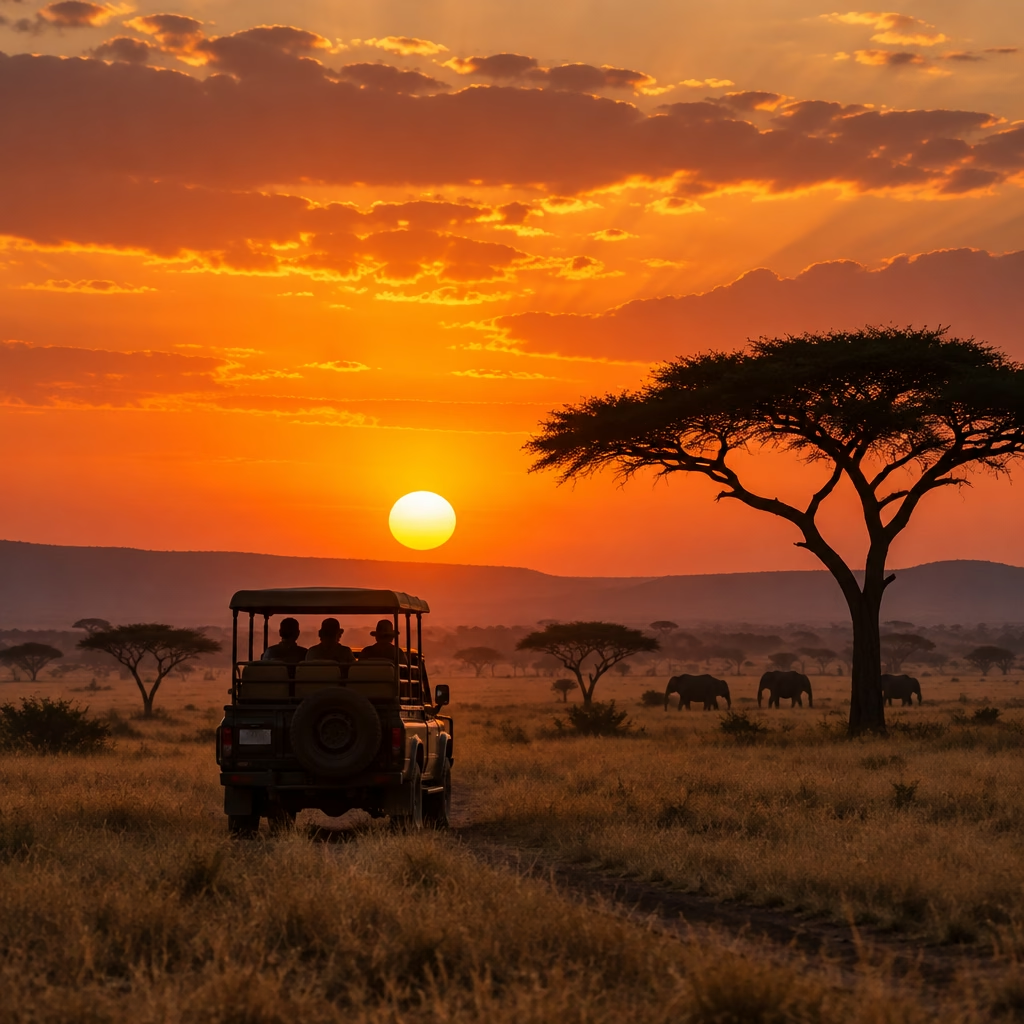
- You travel in a 4x4 with a pop-up roof and an experienced local guide; as a rule you watch from the vehicle and get out only where the guide allows it.
- In the middle of the day you rest at the lodge or camp, with lunch and free time.
- Time runs slowly: sometimes you wait a long while in front of a single animal, and that is exactly where the best pictures are born.
Behaving well
- Speak quietly and move calmly, without leaning out of the window more than necessary.
- Do not try to attract or approach the animals: the guide decides the distances.
- Leave no litter and always follow the rangers' instructions.
- Silence helps you notice more than any zoom lens.
What to pack
- Comfortable clothes in layers, in neutral colours (beige, khaki, green): it is cool at dawn and hot at midday.
- A hat, sunglasses, sun cream and a scarf for the dust.
- Closed, comfortable shoes.
- Binoculars, a camera with a good zoom, spare batteries and a charger.
- Insect repellent. For vaccinations and prophylaxis, speak to your doctor or a travel-health clinic in good time.
- A soft bag: on internal flights and small aircraft the luggage limits can be stricter.
What to expect, and what not
Dirt roads shake you about and raise dust; lodges and tented camps are comfortable but immersed in nature, with the sounds of the night and the occasional insect. You cannot predict which animal you will meet: some days are generous, others quieter. Whoever sets out with curiosity rather than a checklist enjoys the journey more.
If you would like to enjoy a first safari in company, our trip “Tanzania Safari and Zanzibar” lasts 9 days, for a small group of up to 12 with a Greek coordinator: Tarangire, three nights in the Serengeti, the Ngorongoro Crater and, to finish, the beach and the lanes of Zanzibar. Before you leave, check the official sources for entry documents and health guidance, because they can change.